The short version
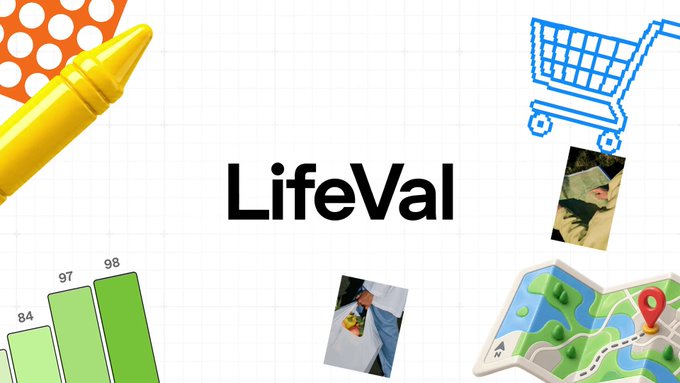
- LifeVal is an OpenAI benchmark for personal-assistant work on everyday tasks, shaped by feedback from thousands of ChatGPT users.
- Named examples include finding childcare, accessing government services, and managing personal finances.
- GPT-6 Astra leads the reported result at 80.6%, and the official page is on openai.com.
At a glance
| Maker | OpenAI |
|---|---|
| Announced | November 2, 2026 |
| What it is | Everyday-task benchmark |
| Leading result | GPT-6 Astra, 80.6% |
| Category | AI & Models |
| Creator / publisher | OpenAI |
| Official link | openai.com ↗ |
| Heat | 🔥 522.1K Heat |
| Announced | |
| Data updated |
A benchmark built around real chores
For AGI to benefit all of humanity, it should help people with the everyday tasks that matter most to them.
LifeVal is not a new chatbot you open and talk to. OpenAI built it as a benchmark: a fixed way to measure whether a model can act like a personal assistant on the jobs people say they want help with. The company says the test was shaped by feedback from thousands of ChatGPT users about where that help would matter most.
The examples OpenAI names are concrete. Finding childcare, getting through government services, and managing personal finances sit at the center of the description. The point is practical assistance, the kind of multi-step errand that mixes looking things up, following rules, and giving you something you can act on.
- Childcare
Help with finding childcare, one of the everyday needs OpenAI cites as shaping the benchmark.
- Government services
Help with accessing public services and the paperwork that comes with them.
- Personal finances
Help with managing money, framed as a core personal-assistant job rather than a trivia quiz.
A year of internal measurement, then a public score
Over the past year, we've used LifeVal to measure and improve how well our models handle these everyday tasks.
OpenAI says LifeVal was already in use inside the company for the past year before the November 2, 2026 announcement. The benchmark was a yardstick for improvement, not only a launch-day demo. The public note ties that work directly to making models better at these everyday tasks.
The result OpenAI highlights is GPT-6 Astra at 80.6%, the top score reported with the release. That figure is the concrete leaderboard claim in the announcement materials. A full side-by-side of other models, the number of tasks, and the exact scoring rubric are not part of the short public description, so 80.6% should be read as the stated leading result rather than a complete picture of every system tested.
| Item | What is public |
|---|---|
| Benchmark | LifeVal, everyday personal-assistant tasks |
| Who built it | OpenAI |
| Top reported score | GPT-6 Astra at 80.6% |
| Where to read it | Official page on openai.com |
What you can use it for, and what is still open
If you build or choose assistants, LifeVal is a lens for a specific question: can the model help with messy daily logistics, not only answer general knowledge. The official write-up lives on openai.com. Nothing in the announcement describes open weights, an API you call to run LifeVal yourself, or a price for the benchmark.
The open questions follow from what the note leaves out. It does not publish a task list beyond the examples, does not explain how partial success is scored, and does not say how often the set will be refreshed as government forms, childcare options, and financial products change. Until those details are spelled out, LifeVal tells you OpenAI's priority and GPT-6 Astra's leading 80.6%, while the method behind that percentage stays only partly visible.
FAQ
Is LifeVal a model I can chat with?
No. LifeVal is OpenAI's benchmark for everyday personal-assistant tasks. GPT-6 Astra is the model reported at the top, with 80.6%.
Which everyday tasks does LifeVal cover?
OpenAI points to needs raised by thousands of ChatGPT users, and names finding childcare, accessing government services, and managing personal finances.