Key Takeaways
- Fear Diagnosis is a horror game where a diagnostic test comes first: your answers decide which kind of horror stage you get, a concept the announcement calls made-to-order horror.
- Results are matched to stages drawn from roughly two million possible combinations, so players who answer differently should face very different nightmares.
- The fear pool is deliberately wide, covering ghosts, insects, enclosed rooms, heights and even filling out documents.
- A demo is available now, and the diagnostic test has a free version, so you can try the quiz part at no cost.
Quick Facts
| Type | Horror game with a diagnostic quiz |
|---|---|
| Devices | Check the official site for supported platforms |
| Price | Demo available; quiz has a free version |
| Languages | Japanese; check the official site for others |
| Highlight | About 2 million stage combinations |
| Learning curve | Low; answer questions, then play |
| Category | Entertainment |
| Creator | 電ファミニコゲーマー |
| Official site | news.denfaminicogamer.jp ↗ |
| Heat | 🔥 108.7K Heat |
| Last updated |
What Fear Diagnosis Actually Is
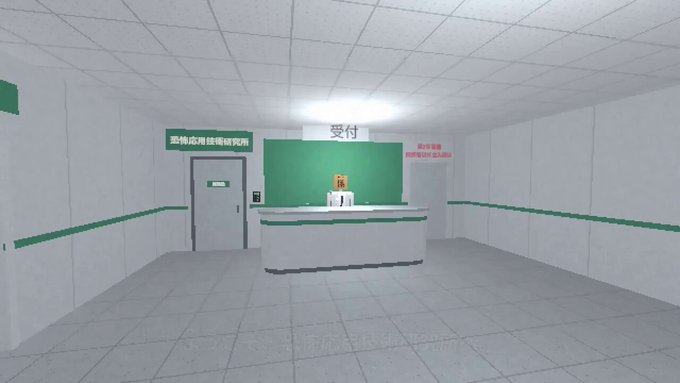
Fear Diagnosis, originally titled Kyōōken-shiki Kyōfu Shindan, is a horror game announced by the Japanese outlet Den Faminico Gamer. Its twist is the order of play: instead of dropping you into one fixed haunted house, it begins with a diagnostic test that asks what scares you. Your answers decide which horror you get, and the announcement describes the result as made-to-order horror.
That structure makes the quiz the real front door of the experience. Two players can sit down with the same game and walk away with completely different nightmares, because the test is not decoration. It is the mechanism that selects your stage, which is why the project is being talked about as a quiz first and a horror game second.
The announcement positions the fear pool as deliberately broad. Alongside classic ghosts, the game draws on insects, enclosed rooms and heights, and it includes one very mundane entry: filling out documents. That blend of familiar phobias and everyday stress is the detail most people react to, because it suggests the horror is aimed at ordinary anxieties rather than only supernatural ones.
- Test first, game second
You answer the diagnostic before any stage loads. Your result is what assigns the horror you play, so the questionnaire is not a warm-up.
- Made-to-order horror
The announcement uses this phrase for stages assembled around your answers rather than a single shared haunted house.
- A wide fear menu
Ghosts, insects, enclosed spaces, heights and paperwork all appear in the announced range, mixing phobias with mundane stress.
- Demo plus free quiz
A demo is available now, and the diagnostic test has a free version, so the quiz portion can be tried without paying.
How the Diagnostic Test and Stage Matching Work
The flow is simple to describe: you take the diagnostic test, and the game reads your result to choose a stage. The announcement says results are matched to stages drawn from roughly two million possible combinations. That number is the headline figure here, and it is best understood as the size of the combination space rather than a promise that every run feels unique.
Because the notes do not spell out the exact question wording or the scoring formula, treat any claim about how individual answers are weighted as unconfirmed. What is confirmed is the direction of travel: your fears are the input, and the stage is the output. If you want the precise question list and result categories, check the official site rather than relying on secondhand summaries.
The announced fear categories give you a rough map of what results can look like. A player who flags insects should not expect the same stage as someone who flags heights or enclosed rooms, and the paperwork entry suggests at least one result type leans on mundane dread rather than jump scares. The exact labels for those result types have not been detailed in the announcement.
- About two million combinations
This is the announced scale of the stage combination space. It describes variety across the system, not a guarantee of two million handcrafted levels.
- Answer weighting is unconfirmed
The announcement does not publish the scoring rules. Check the official site if you want to know exactly how each answer influences your result.
- Fear categories as result hints
Ghosts, insects, enclosed rooms, heights and documents are the announced fear types, so expect results to cluster around those themes.
- Free quiz, paid-unknown game
The diagnostic has a free version. Pricing for the full game has not been stated, so verify it on the official site before assuming.
How to Try It: Demo, Free Quiz and What to Check
Start with the diagnostic test, because that is the part with a free version and it tells you immediately whether the concept lands for you. Answer honestly rather than picking the scariest-sounding options; the whole point is that the game responds to your actual fears, and a performed answer just gives you a stage built for someone else.
After the test, move to the demo. The demo is available now according to the announcement, and it is the only way to see how a generated stage actually plays. Pay attention to which fear category your result maps to, then note how the stage uses it. That comparison between your stated fear and the delivered scare is the most interesting thing this game does.
Before you download anything, confirm the platform situation on the official site. The announcement does not list supported devices, languages beyond the original Japanese, or a release date for the full version. Those are the details most likely to change, so verify them directly instead of trusting a summary, including this one.
- Answer honestly
The test is the input for your stage. Choosing answers for shock value gives you a result that does not reflect you, which defeats the made-to-order premise.
- Compare fear and payoff
Note your result category, then watch how the demo stage uses it. That gap or match is where the design shows itself.
- Verify platforms yourself
Supported devices, languages and full-release timing are not detailed in the announcement. Check the official site before planning around them.
- Try the free quiz first
Since the diagnostic has a free version, you can evaluate the concept at no cost before committing time to the demo.
How It Compares and Who It Is For
Most horror games hand every player the same corridor. Fear Diagnosis inverts that by making the questionnaire the level selector, which puts it closer to a personality quiz with a playable payoff than to a traditional scare machine. The nearest comparison is any diagnostic-style quiz that sorts you into a type, except here the type is a stage you then have to survive.
The broad fear menu is what separates it from ghost-only horror. Insects, enclosed rooms, heights and paperwork reach players who do not find supernatural themes frightening at all, and the paperwork entry in particular reads as a joke aimed at anyone who has dreaded an administrative task. That range is a strength, but it also means the scares may be uneven for any single player.
This is entertainment, not a psychological assessment. The diagnostic is a game mechanic, and its results should be read as a stage assignment rather than a statement about your mental health. If you enjoy quizzes, short horror experiences and seeing how a system reacts to your input, this is aimed at you. If you want a long, authored horror campaign, the combination-based approach may feel thin.
- Quiz-as-level-selector
Unlike fixed haunted houses, the test decides your stage. That makes it a hybrid of personality quiz and horror game.
- Wider than ghosts
Insects, enclosed spaces, heights and documents broaden the audience beyond players who only fear the supernatural.
- Not a real diagnosis
Treat results as a game assignment. It is a fun experience, not a scientific or clinical assessment of your fears.
- Best for quiz fans
Players who like sorting quizzes and short scares will get the most from it. Those wanting a long authored story should wait for more details.
Step-by-Step Guide
Take the diagnostic test
Begin with the questionnaire, which has a free version. Answer based on what genuinely unsettles you, since your responses are the input that selects your horror stage.
Read your result category
Your result maps to a fear theme such as ghosts, insects, enclosed rooms, heights or documents. Note which one you received, because it explains the stage you are about to face.
Launch the demo
The demo is available now according to the announcement. Play through the stage your result assigned and watch how the theme is translated into scares, pacing and environment.
Compare and retake
If you want to see the range, retake the test with different answers and compare the two stages. This is the fastest way to understand how much the diagnostic actually changes.
Check the official site for updates
Platforms, languages and full-release plans are not detailed in the announcement. Visit the official site, news.denfaminicogamer.jp, for confirmed information before making assumptions.
Frequently Asked Questions
Is Fear Diagnosis free to play?
The diagnostic test has a free version, so the quiz portion can be tried at no cost. A demo of the game is also available now. Pricing for the full version has not been stated in the announcement, so check the official site before assuming it will be free or paid.
What platforms does it run on?
The announcement does not list supported devices, so treat any platform claim as unconfirmed. Since it is a Japanese project announced by Den Faminico Gamer, the safest move is to check the official site, news.denfaminicogamer.jp, for the current platform list before you plan to play.
How does the diagnostic decide my horror stage?
Your answers are matched to a stage drawn from roughly two million possible combinations, which the announcement calls made-to-order horror. The exact scoring rules and question wording have not been published, so how each individual answer is weighted remains unconfirmed. Check the official site for specifics.
What kinds of fear does it cover?
The announced range includes ghosts, insects, enclosed rooms and heights, plus the mundane fear of filling out documents. That mix of classic phobias and everyday stress is deliberate, and it means players who do not fear the supernatural can still find a result aimed at them.
Is the result a real psychological assessment?
No. The diagnostic is a game mechanic that assigns you a horror stage, not a clinical or scientific test. Read your result as an entertainment outcome and enjoy the stage it produces. If you are curious about actual anxiety or phobias, speak with a qualified professional instead.