The short version
- On November 2, 2026, 裏ちゃん asked who could solve a dining message shown only in a short preview.
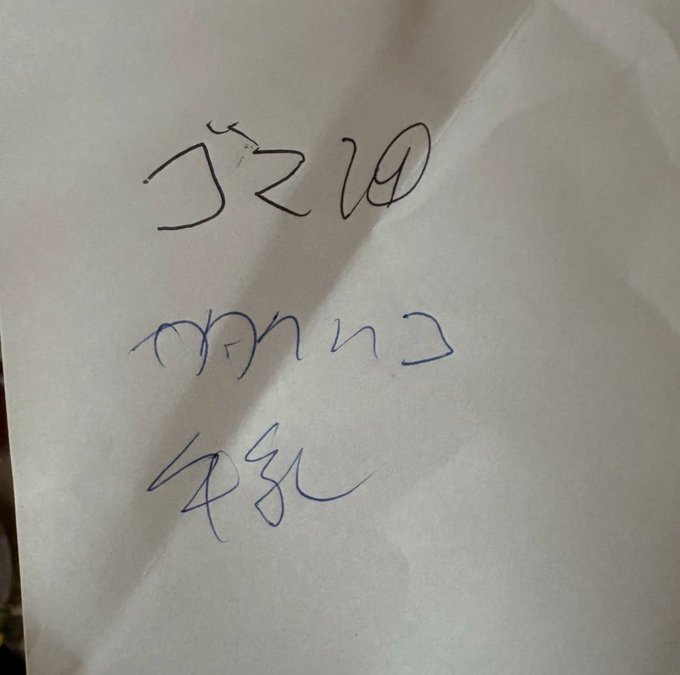
- The note is a handwritten shopping list: sesame oil, katakuriko (a cooking starch), and milk.
- No official page, download, or published solution exists yet, so the riddle is still open.
A grocery list with a mystery label
このダイニングメッセージ解ける方いますか?
That line asks, in plain terms, whether anyone can solve this dining message. The object attached to the question is a handwritten shopping memo, not a released game. The items written down are sesame oil, katakuriko—a cooking starch—and milk. No public build, download, or official page has been published yet; so far 裏ちゃん has only shown the note in a short preview.
The title does the heavy lifting. In Japanese mystery fiction, a dying message is the fragment a victim leaves for someone else to decode. Swap one sound and dying becomes dining: the same kind of clue, now set at the table. A list of what to buy is already a private note. Naming it a dining message tells you to read those three staples as if they were last words.
Why three pantry staples are enough
Dying messages work because the audience already knows the contract. Something small is on the page, something about it is wrong or incomplete, and the pleasure is in noticing. Sesame oil, starch, and milk are small in exactly that way. They look like an errand. They are being offered as a case. The announcement does not add a rule book, a timer, or a second image with the answer filled in.
For people who make quizzes and puzzle games, the format is the interesting part. The whole prompt is a domestic scrap plus a genre word players already trust. You do not need a new interface to get strangers arguing over a memo. Ordinary readers get a parlor riddle they can try with nothing but the three words. Creators get a reminder that the lore around a clue can be larger than the clue itself.
- Sesame oil
The first item on the memo, written as a normal grocery entry rather than a labeled cipher.
- Katakuriko
Japanese cooking starch, the word that gives the riddle its name and the item solvers keep turning over.
- Milk
The third staple on the list, sitting beside the other two with no extra gloss from the creator.
What is still unsolved
The preview asks for a solution and does not supply one. One open reading is that the three items hide a pun, a dish, or a letter clue, the way a dying message hides a name. Another is that the joke is the invitation: a normal shopping list dressed as a case file, so the sharp move is to notice how little there is to crack. Reactions split along those lines because both are still available. Nothing in the announcement crowns a winner.
What to watch is whether 裏ちゃん shows more than the preview. A fuller note, a stated answer, or a real puzzle page would turn the meme into something you can finish. Until any of that appears, the trending object is the note itself: sesame oil, katakuriko, and milk, framed as a dining-table dying message, with the creator still asking who can solve it.