The short version
- OpenAI Launches 'Private Intelligence' for High-Sensitivity Corporate Workloads (Provider: OpenAI Enterprise; Data Retention Policy: Strict Zero Data Retention (never enters shared training pools)).
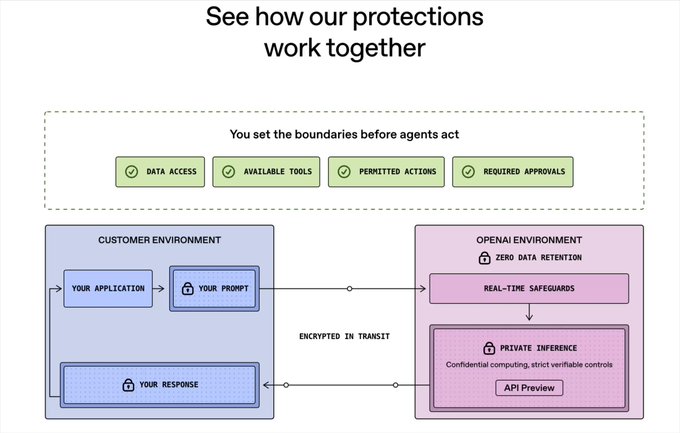
- Zero Data Retention, Isolated Inference, and Customer-Managed Keys Explained (Security Controls: Isolated inference runtime, customer-managed keys (CMEK), full audit logs).
- Using the Private Intelligence Checklist for SOC2, HIPAA, and Internal Security Reviews (Target Workloads: Proprietary codebases, M&A legal review, and confidential financial data).
At a glance
| Provider | OpenAI Enterprise |
|---|---|
| Data Retention Policy | Strict Zero Data Retention (never enters shared training pools) |
| Security Controls | Isolated inference runtime, customer-managed keys (CMEK), full audit logs |
| Target Workloads | Proprietary codebases, M&A legal review, and confidential financial data |
| Category | AI & Models |
| Creator / publisher | OpenAI |
| Official link | openai.com ↗ |
| Heat | 🔥 418.7K Heat |
| Announced | |
| Data updated |
OpenAI Launches 'Private Intelligence' for High-Sensitivity Corporate Workloads
OpenAI launched Private Intelligence (openai.com/business/private-intelligence), a dedicated enterprise security tier built with large corporate customers to run frontier models on sensitive internal workloads.
Zero Data Retention, Isolated Inference, and Customer-Managed Keys Explained
It enforces zero data retention, isolated inference environments, customer-managed encryption keys, and granular audit logs so proprietary code and financial records never touch shared training pools.
Using the Private Intelligence Checklist for SOC2, HIPAA, and Internal Security Reviews
Review the Private Intelligence architecture checklist when preparing SOC2 or HIPAA compliance documentation for internal AI coding and legal assistants.
FAQ
What are the verified facts and timeline behind OpenAI Private Intelligence?
Provider: OpenAI Enterprise; Data Retention Policy: Strict Zero Data Retention (never enters shared training pools); Security Controls: Isolated inference runtime, customer-managed keys (CMEK), full audit logs. It enforces zero data retention, isolated inference environments, customer-managed encryption keys, and granular audit logs so proprietary code and financial records never touch shared training pools.
What are the key implications and what happens next?
Target Workloads: Proprietary codebases, M&A legal review, and confidential financial data. Review the Private Intelligence architecture checklist when preparing SOC2 or HIPAA compliance documentation for internal AI coding and legal assistants.