The short version
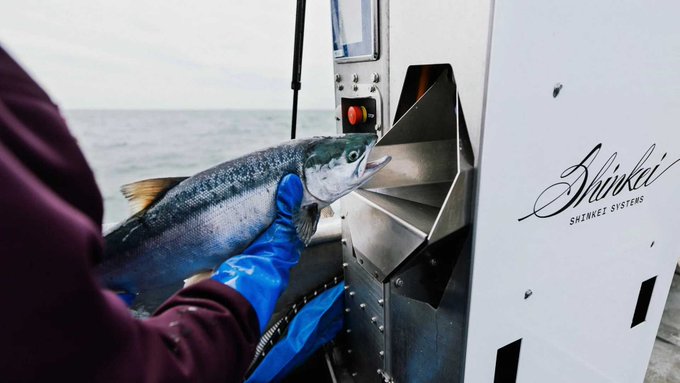
- Shinkei Systems puts a fridge-sized AI robot on the boat deck to spike a fish through the brain and cut near the gills in about seven seconds.
- The pitch is preserved flavor and texture, plus a catch that can last up to three times longer, with Michelin-star kitchens described as lining up for the fish.
- A public build, download, and official page have not been published; the debut so far is a short preview.
At a glance
| Company | Shinkei Systems (called Shinkei in the announcement) |
|---|---|
| Hardware | Fridge-sized robot on the boat deck |
| Cycle | Species ID, brain spike, and gill cut in about 7 seconds |
| Funding | $50 million Series A |
| Category | AI & Models |
| Creator / publisher | Ole Lehmann |
| Heat | 🔥 1.4M Heat |
| Announced | |
| Data updated |
What the robot does with each fish
We have a winner for the most absurd AI startup ever.
Ole Lehmann framed Shinkei as a Peter Thiel-backed company that uses AI robots to carry out a Japanese technique known as ike jime: spiking a fish through the brain right after it is caught, then bleeding it. The machine is fridge-sized and sits on the deck. Crew members feed in a fish. AI identifies the exact species so the robot knows where that fish's brain and gills are.
It then drives a spike through the brain and cuts near the gills in about seven seconds. The fish goes into an ice slurry so the blood drains. The claim is that the animal never sits there stressing, so flavor and texture stay intact.
- Species first
Identification tells the robot the anatomy for that exact fish before any spike or cut.
- Seven-second pass
The brain spike and the cut near the gills are described as taking about seven seconds.
- Ice slurry next
After the robot finishes, the fish goes into an ice slurry so the blood drains out.
| Stage | What happens |
|---|---|
| Load | The crew feeds a fish into the deck robot |
| Identify | AI names the species and locates the brain and gills |
| Spike and cut | A spike goes through the brain and a cut is made near the gills, about seven seconds |
| Drain | The fish enters an ice slurry so the blood drains |
Why the old method rarely leaves Japan
The problem Shinkei is built around is ordinary boat handling. When a fish is caught, it usually suffocates on the boat. That stress floods the meat with hormones and lactic acid, which hurts flavor and texture. The long-standing Japanese fix is to spike the brain immediately after the catch, which stops that cascade.
Doing the same work by hand is described as impractical for most American fishing crews. Shinkei's bet is that a robot which already knows the species, and therefore the anatomy, can make the technique routine on a working deck instead of a specialist skill.
Who wants the fish, and what is still unknown
The announcement says dozens of Michelin-star restaurants are already lining up to buy the fish, so the commercial story so far is the processed catch, with the robot as the tool on the boat. Editor notes on the same company add that Shinkei Systems raised a $50 million Series A for this automatic ike jime system. The stated payoff is fish that taste better and last up to three times longer.
A public build, download, and official page have not been published. There is no released app, API, or open-weight model, and no hardware price or restaurant price has been stated. Architecture detail stops at species identification plus the guided spike and gill cut. The three-times shelf life, the Michelin lineup, and the Peter Thiel backing are claims from the November 6, 2026 preview, which is a short video and announcement rather than a spec sheet you can test yourself.
FAQ
Is the thing for sale the robot or the fish?
The preview puts the robot on the fishing boat and says Michelin-star restaurants are lining up to buy the fish. No public hardware sale, download, or price has been published.
What is still unconfirmed beyond the preview?
Shelf life of up to three times longer, the restaurant lineup, and the backing are stated in Ole Lehmann's November 6, 2026 description. Independent specs, a product page, and a way for crews to access the system have not appeared.