Key Takeaways
- Beer Pour Game is a browser micro-game from Pokapoka Games about pouring a glass of beer just right, announced on October 19.
- Only a short preview exists so far: there is no public build, download or official page, and the scoring rules are unconfirmed.
- The skill is timing: hold to pour, release before the glass is full, and let the foam settle into a modest head.
- It is a different game from the other beer-foam title by a different creator, so do not reuse that game's ratios or controls.
Quick Facts
| Type | Browser micro-game (pour timing) |
|---|---|
| Devices | Phones and desktop browsers (planned) |
| Price | Not announced; no public build yet |
| Languages | Preview shown in Japanese; others unconfirmed |
| Highlight | One-tap pour with instant retry |
| Learning curve | Seconds to learn, hard to perfect |
| Category | Browser Games |
| Creator | ぽかぽかゲーム |
| Heat | 🔥 542.9K Heat |
| Last updated |
What Pokapoka Games' Beer Pour Game Actually Is
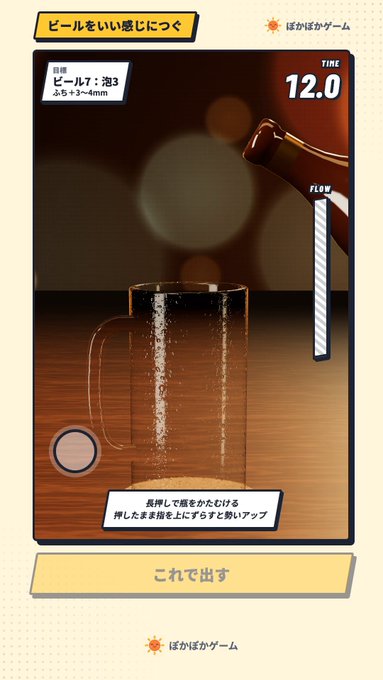
Beer Pour Game is an upcoming browser micro-game from Pokapoka Games, the small Japanese studio behind the one-stroke hanger game. The creator announced it on October 19 with a simple description: a game about pouring beer just right. The premise is deliberately tiny. You tilt or hold a tap, watch the glass fill, and try to stop at a level that looks satisfying. There is no story, no character roster and no long tutorial promised. The appeal is the same as a good bar trick: one skill, judged instantly, easy to retry.
People are searching for it because the idea is instantly understandable and instantly debatable. Everyone has an opinion about the correct beer-to-foam ratio, and a game that scores that opinion turns a mundane bar task into a competition. The announcement arrived as a short preview rather than a playable page, so curiosity is running ahead of access. That gap explains most of the current questions: where can I play it, what are the controls, and how is a good pour actually measured?
It is worth being precise about what exists today. Pokapoka Games has shown a preview of the concept; no public build, download or official page has been published yet. The exact scoring rules, the playable link and any score-sharing features are unconfirmed. Treat any specific foam percentage you see quoted as someone else's guess, not a rule. When the studio publishes the game, the official site will be the only reliable place to confirm the details.
- A one-idea micro-game
The whole concept is a single action: pour beer to a level that feels right. That narrow focus is what makes it readable in a few seconds of video.
- From an established small studio
Pokapoka Games is known for compact browser toys, including a one-stroke hanger game, so a tiny, polished interaction fits the studio's pattern.
- Preview stage, not launch stage
Only a short preview and announcement exist so far. No playable link, download or official page has been confirmed.
- Not the same as other beer games
A similarly themed beer-foam game exists from a different creator. Its scoring and pour rules do not apply here.
How the Pour Works: Controls, Foam and Win Conditions
Pour games are built on one continuous input. On a phone you would hold a finger on the screen or drag it to open a virtual tap; on a desktop browser you would hold the mouse button or drag the cursor. The longer you hold, the faster the glass fills. The skill is in the release: let go too early and the glass looks half-hearted, hold too long and the head of foam climbs past the point anyone would want to drink. Pokapoka Games has not confirmed the exact control scheme, so expect either a hold-and-release tap or a tilt-style drag.
The interesting part of the genre is that beer has two layers, and both are being judged. Liquid fills from the bottom; foam builds on top and grows faster when the pour is aggressive. A good pour usually means a tall, clean body of beer with a modest, creamy head, not a glass of pure froth and not a flat glass with no head at all. Because the preview does not state a target ratio, the honest answer is that the winning band is unknown until the game is playable.
Win conditions in this kind of micro-game are usually simple: a score, a rating word such as perfect or good, or a pass-fail check against a hidden target range. Some pour games add a timer, a wobbling glass, or a moving target line that shifts between rounds. None of that is confirmed for this title. What the announcement does confirm is the tone: the goal is just right, a subjective-sounding target that is funnier and friendlier than a strict measurement.
- One input, one decision
Hold to pour, release to stop. The entire game lives in the timing of that release.
- Two layers to balance
Liquid and foam fill at different rates, so a good pour is a balance rather than a maximum.
- Scoring is unconfirmed
No target ratio, rating scale or timer has been published. Check the official site before trusting any number.
- Retry-friendly by design
Short rounds and instant restarts are the norm for browser micro-games, which is what makes one more try so easy.
Pouring Strategy: How to Hit Just Right When It Launches
Until a playable build appears, the most useful preparation is watching the preview closely and noting how fast the glass fills. In pour games, the last second matters most: the difference between a good head and an overflowing one is often a fraction of a hold. A reliable habit is to pour fast for the first two-thirds of the glass, then slow down or release early and let the foam settle before topping off. That two-stage approach is standard bartending practice and usually maps well onto pour-game scoring.
Watch the foam, not the liquid line. Foam keeps expanding for a moment after you stop pouring, so stopping exactly on the target line often overshoots. Aim slightly under and let the head rise into place. If the game includes a visible target marker, treat it as the top of the foam, not the top of the beer. If it does not, judge by proportion: a head roughly a finger wide is the classic look people recognize.
Practice consistency rather than chasing one lucky score. Repeat the same hold duration several times and see how the result varies; that tells you how much randomness the game has. If rounds are timed, decide your release point before the glass is full instead of reacting at the last instant. And remember that a slightly imperfect pour is usually still funny: the comedy of the genre comes from the near-miss, not from a flawless result.
- Two-stage pour
Fill most of the glass quickly, then ease off and let the foam settle before the final top-up.
- Stop short of the line
Foam keeps growing after release, so aim slightly under your target and let it rise.
- Repeat one duration
Testing the same hold several times reveals how much variance the game allows.
- Decide before you release
Pick your stopping point in advance; reacting at the last moment is what causes overflows.
How It Compares With Other Casual Browser Games, and Who It Is For
Beer Pour Game belongs to a well-worn family of browser micro-games: one-button timing challenges where a single tap decides success. Think of stacking games, ring-toss games or pour-and-fill toys. What separates a good one from a forgettable one is feedback: a satisfying fill animation, a clear rating, and a reason to press retry. Pokapoka Games has a track record with small, tidy interactions, which is a good sign, but the feel of the pour cannot be judged from a preview.
Comparisons with other beer-themed games are natural but should be handled carefully. A different creator has made a beer-foam game with its own scoring and pour rules. Because the studios are different, that game's target ratios and controls are not a guide to this one. If you have played it, you will recognize the idea, not the rules. Treat them as two separate takes on the same everyday ritual.
Who is this for? Anyone who likes thirty-second browser distractions, bar-themed humor, or skill games where the challenge is precision rather than reflexes. It is not for players who want progression, unlocks or long sessions. The main limitation right now is availability: there is nothing to play yet. Browser games of this type normally run in a phone or desktop browser without installation, which is the format the studio has indicated, but the actual page has not been published.
- Same family, different flavor
It sits alongside one-button timing games; the theme and the feedback loop are what set it apart.
- Not interchangeable with other beer games
A separate creator's beer-foam title has its own rules. Do not carry its scoring over.
- Best for short sessions
The format suits a quick break rather than long play, which is typical for browser micro-games.
- Availability is the catch
No public build or official page exists yet, so there is nothing to install or try today.
Step-by-Step Guide
Confirm You Have the Right Game
Search for the Japanese title or the English name together with Pokapoka Games. Several beer-themed games exist from other creators, and their rules differ. Check the studio name before you follow any guide, because a pour tip written for another game may not apply here.
Watch the Preview to Read the Pour
The announcement video is currently the only reference for how the game looks. Watch how quickly the glass fills, where the foam sits, and whether the pour appears to be a hold or a drag. Note the moment the pour stops; that timing is the skill the game is testing.
Check the Official Site for a Playable Build
No public build, download or official page has been published yet. Visit the studio's official site periodically and look for a play link or a new announcement. Do not download files from unofficial mirrors claiming to be the game; nothing legitimate has been released so far.
Play Your First Round
When a build appears, start with a slow, deliberate pour. Hold the input to fill, release before the glass reaches the top, and let the foam settle. Read the rating you receive, then repeat the same hold duration once to see how consistent the game is.
Refine Your Timing
Adjust in small steps. If you overflowed, shorten the hold slightly; if the head is thin, extend it. Keep a mental note of the duration that scored best and aim to reproduce it. Short, repeated attempts teach the timing faster than long sessions.
Frequently Asked Questions
Is Beer Pour Game playable right now?
No. Pokapoka Games has only shown a preview and an announcement so far, and no public build, download or official page has been published. Anything claiming to be a playable version today is not confirmed by the studio. Check the official site for the first real release.
Is it the same as the other beer-foam game?
No. A different creator made a beer-foam game with its own scoring and pour rules. This one comes from Pokapoka Games, so the target ratios, controls and ratings from that other title do not carry over. Treat them as separate games that happen to share a theme.
What is the perfect foam ratio?
That has not been published. The studio described the goal only as pouring beer just right, and no scoring scale, target percentage or rating system has been confirmed. Any specific ratio you see quoted is guesswork. Once the game is playable, the official site or the game itself will be the reliable source.
Will it work on phones?
Browser micro-games of this type normally run in mobile and desktop browsers without installation, and the studio's preview suggests that format. However, no playable page exists yet, so phone support is not confirmed. When it launches, expect to open it in a browser rather than install an app.
How much will it cost?
No price has been announced, and there is nothing to buy yet. Small browser games from independent Japanese studios are often free to play in the browser, but that is a general pattern, not a confirmed detail for this title. Check the official site when the game is released.